Kitchen Discipline at Home | 7 Habits for Calmer Cooking
Learn 7 practical kitchen habits that help home cooks reduce chaos, improve focus, and build a calmer, more organised, and more confident way of cooking.
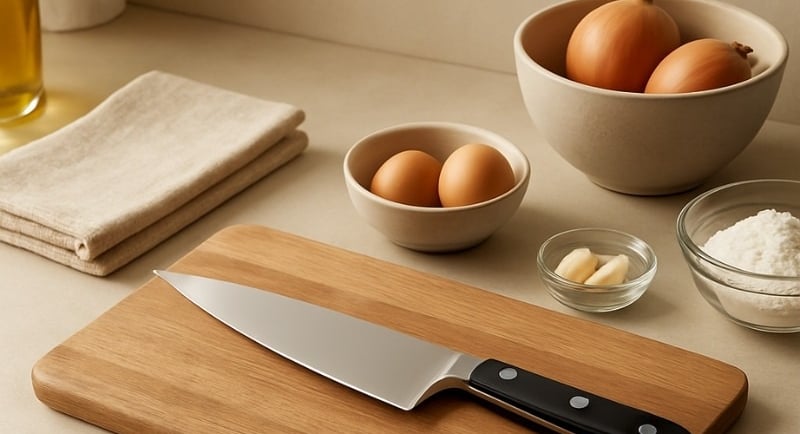
A calmer kitchen rarely happens accidentally.
It usually grows from small habits repeated with care. For home cooks, kitchen discipline is not about rigidity. It is about creating more order, more clarity, and less friction in the way you cook.
When your habits are weak, even simple meals can feel heavier than they should. You forget ingredients, lose track of timing, crowd your work surface, and finish with the feeling that everything became more chaotic than necessary.
When your habits become steadier, cooking changes. It becomes quieter, more controlled, and far more enjoyable.
That is what kitchen discipline is really for.
Start with a clear work surface
One of the simplest ways to make cooking feel calmer is to begin with less visual and physical clutter.
When the counter is crowded, your mind becomes crowded too. You move things around more than necessary. You lose space to prep properly. Small frustrations begin before the cooking has even started.
A clear work surface creates room to think. It gives each task a place. It makes the kitchen feel more manageable from the beginning.
This does not mean your kitchen needs to look perfect. It simply means you create enough order for the work in front of you.
Even a small cleared area can change the whole rhythm of a meal.
Read the recipe before you begin
Many cooking problems are not caused by lack of skill. They begin because the cook is always reacting instead of preparing.
Reading a recipe properly before you begin helps you understand the flow of the dish. You notice what needs to be chopped first, what needs time on the stove, what should be prepared in advance, and where the important timing points are.
This is especially helpful for home cooks who often feel rushed halfway through a meal.
A recipe should not keep surprising you line by line. It should guide work you already understand.
That one habit alone can remove a great deal of avoidable stress.
Prepare more than you think you need
Good prep is not about making cooking feel formal. It is about reducing friction once heat and timing begin to matter.
If your knife is still in the drawer, your herbs are still unwashed, and your ingredients are still half-packed when the pan is already hot, everything becomes more rushed.
Preparing a little more than feels necessary gives you margin. It gives you calm. It gives you time to notice what the food needs.
This might mean:
measuring ingredients first
washing greens in advance
setting out salt and oil
keeping the right pan ready
preparing a towel and spoon before you start
These are small actions, but they change the whole feeling of cooking.
Clean as you go
A kitchen becomes overwhelming when small messes are left to accumulate.
A used bowl here, peelings there, an oily spoon on the counter, a knife pushed to the side, a board you can no longer use properly. None of this seems serious on its own, but together it creates noise.
Cleaning as you go keeps the kitchen workable. It protects your focus. It also makes the end of cooking feel much less heavy.
You do not need to stop after every movement and make everything spotless. That is not the point.
The point is to maintain enough order that the next task can happen smoothly.
A bowl rinsed early is one less thing pulling at your attention later.
Keep your tools close and dependable
Kitchen discipline becomes much easier when your tools support you.
If your knife is blunt, your board slips, your towels are never nearby, or you are constantly searching for the spoon you need, the kitchen starts fighting against you.
A few dependable tools, kept where you can actually reach them, reduce hesitation and help the work feel steadier.
This is why I always prefer a few useful tools over a drawer full of gadgets. Good cooking usually depends on a few things, used well and often.
A sharp chef’s knife, a stable chopping board, a pan you trust, and towels you always keep close will improve your daily rhythm more than most people expect. I’ve gathered the essentials I recommend most often on the Resources page.
Taste before the end
Many home cooks wait until the dish is finished before paying real attention to flavour. By then, it is often harder to correct.
Tasting earlier changes that.
When you taste during cooking, you begin to understand what is developing. You notice if something needs more salt, more acidity, more time, or more softness. You make smaller corrections instead of large last-minute guesses.
This habit builds confidence because it keeps you involved in the dish rather than distant from it.
Tasting is not only about flavour. It is also about awareness.
And awareness is one of the strongest forms of discipline in the kitchen.
Slow down the moments that matter
Not every moment in cooking needs the same level of attention.
Some parts can be quick and ordinary. Others deserve more calm. The important thing is to recognise which moments shape the outcome most.
That might be:
the first minutes of sautéing onions
checking seasoning before serving
watching heat when browning
cutting ingredients evenly
resting meat or fish properly
plating with more care than usual
Kitchen discipline is not about making everything slow. It is about slowing down the moments that deserve it.
That simple distinction makes cooking feel more intentional and much less frantic.
Calm is built through repetition
Most people do not become calmer in the kitchen because they suddenly discover a perfect system.
They become calmer because they repeat a few useful habits often enough that those habits begin to support them naturally.
A clear counter before cooking begins.
A recipe read through properly.
More prepared in advance than seems necessary.
Small messes dealt with early.
The right tools kept close at hand.
Flavour checked before the end.
More attention given to the moments that matter most.
These are not dramatic changes. Together, they change the whole experience of cooking.
And that is what discipline should do. Not make the kitchen feel strict. Make it feel steadier.
Final thought
A well-run kitchen at home does not need to feel stiff or overly controlled. It should still feel alive, warm, and human.
Stronger habits make the kitchen easier to trust. The work feels lighter, your movements become more deliberate, and cooking begins to feel calmer and more grounded.
That kind of discipline is not restrictive.
It is generous.
It gives you space to do better work.
If you want a practical place to begin, start with the Start Here page, then explore the Resources page for tools and guidance that support this way of cooking.
Refined cooking guidance from Chef Viviane of Klavertje Vier
For serious home cooks and aspiring chefs building stronger kitchen foundations.
hello@klavertjevier.store
© 2026. All rights reserved.
Sign up below to get the free Calm Kitchen Starter Guide. You'll also be the first to hear about new guides, recipes and kitchen resources.
Recommended Kitchen Tools